As an Amazon Associate, I earn from qualifying purchases. Links below may be affiliate links.
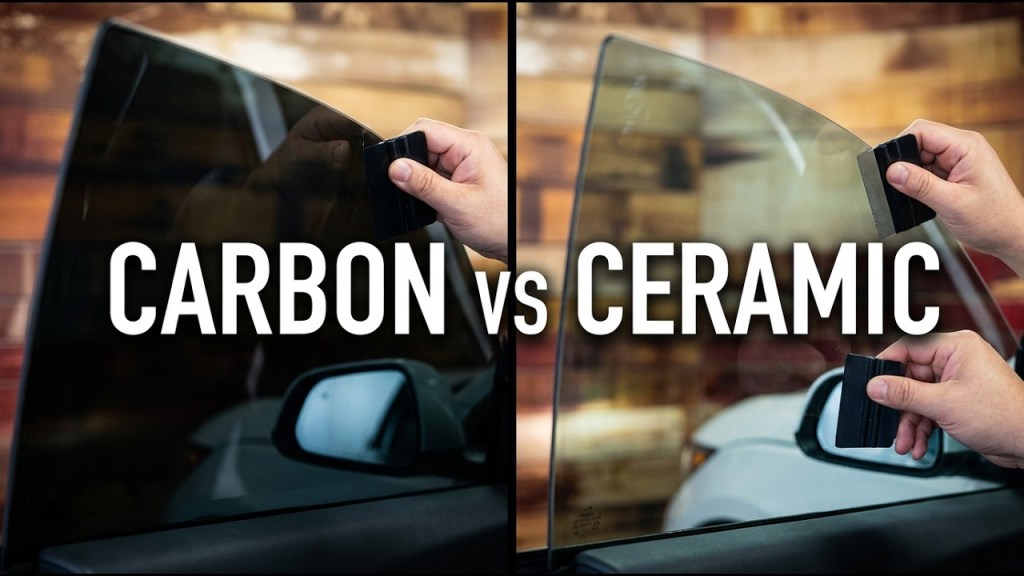
You walk into a tint shop and suddenly you’re being pitched window film like you’re shopping for a mortgage: carbon this, ceramic that, and a price gap of several hundred dollars. Here’s the plain-English difference, and how to decide which one you actually need.
Carbon window tint: the solid middle option
- Matte black look that doesn’t fade or turn purple like cheap dyed film.
- Blocks roughly 40–50% of infrared heat.
- Doesn’t interfere with radio, GPS or phone signal.
- Helps hold glass together a bit in a smash-and-grab.
- Typically about $200–400 for a full car, depending on where you live.
Ceramic window tint: the premium option
- Uses non-metallic, non-conductive ceramic particles.
- Blocks around 80% of infrared heat on good films, plus up to 99% of UV.
- Better glare reduction when you’re driving into the sun.
- Zero signal interference.
- Usually about double the price of carbon, or more.
Carbon vs ceramic at a glance
| Carbon | Ceramic | |
|---|---|---|
| Infrared heat blocked | ~40–50% | up to ~80% |
| UV blocked | High | Up to 99% |
| Signal interference | None | None |
| Typical full-car price | $200–400 | Roughly 2x carbon |
Who should pay for ceramic
- You live somewhere hot (Arizona, Texas, Florida). The heat rejection is the whole point, and you’ll feel it every day.
- You have leather seats or a light interior you want to protect from UV.
- You commute a lot and spend hours in the car.
When carbon is perfectly fine
If you’re on a budget, live somewhere mild, mostly want the look and privacy, or you’re tinting a car you plan to trade in, carbon does about 80% of what ceramic does for about half the price. That isn’t settling. It’s a good product.
The brand matters more than the label
There’s junk ceramic and junk carbon out there. Ask the shop exactly which film they’re installing and look up its heat-rejection numbers (TSER and IR rejection). Established names like 3M, LLumar and SunTek are a safe bet. If someone is selling “ceramic” for the same price as everyone else’s carbon, be suspicious.
Doing it yourself? Here’s the ceramic tint film I looked at, and you can compare other ceramic films on Amazon and tint install tool kits.
FAQ
Does ceramic tint have to be darker to block more heat?
No. Heat rejection comes from the ceramic particles, not the darkness, so a lighter ceramic film can out-perform a darker carbon one.
Will tint mess with my phone or GPS?
Not carbon or ceramic. Older metallic films were the ones that caused interference.
Is ceramic worth it in a cold climate?
Usually only if you care about UV and glare. For looks and privacy, carbon is the better value.
Want more honest tests like this?
I test car care products on my own cars and tell you what actually happened, good or bad. Subscribe to Peter von Panda on YouTube so you catch the next one, and leave a comment on the video with your own results. Peter von Panda out.