As an Amazon Associate, I earn from qualifying purchases. Links below may be affiliate links.
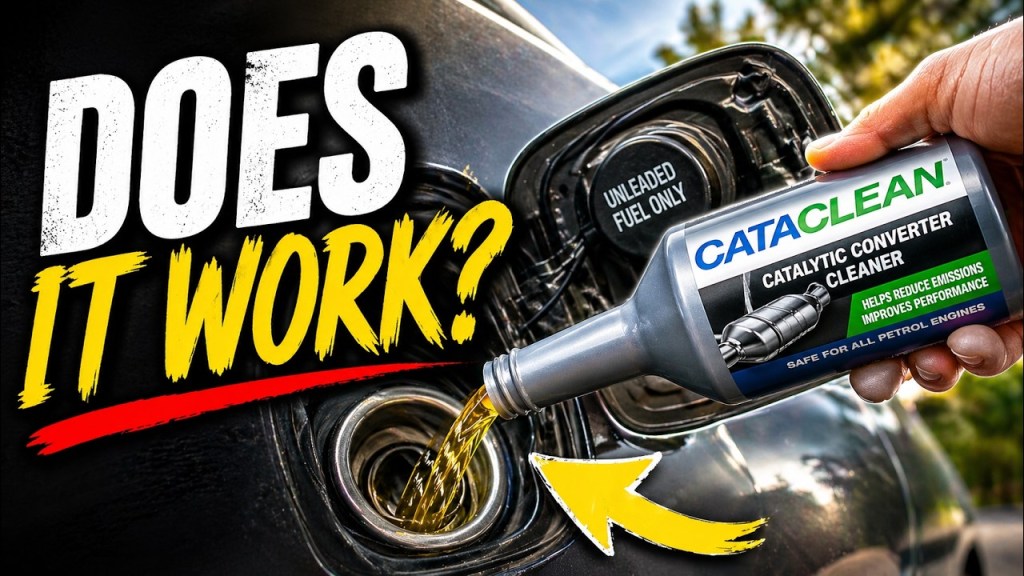
My Porsche Cayenne threw a check engine light at about 73,000 miles. The code was a catalyst efficiency code (P0430 on my car, the bank-2 twin of the more common P0420): the downstream O2 sensor was saying the catalytic converter wasn’t cleaning the exhaust as well as it should. A new converter can run anywhere from a few hundred to well over a thousand dollars, so before paying for that I tried a $20-ish bottle of Cataclean.
Short answer: in my case it worked. The light went off right after the treatment. But it only works in certain situations, and it’s worth knowing which ones before you buy.
What a P0420 / P0430 code actually means
Your car has an O2 sensor before and after the catalytic converter. When the rear sensor sees exhaust that looks too much like the front sensor’s, the computer decides the converter’s efficiency has dropped and turns on the light. Carbon and soot buildup on the honeycomb can cause that, and so can a converter that’s simply worn out, a lazy O2 sensor, or an exhaust leak.
Why I tried Cataclean instead of the other “hacks”
I’d seen people pour lacquer thinner in the gas tank, or pull the converter and soak it in solvent. The first felt too risky for my engine, and on the Cayenne the labor to remove the converters costs about as much as new parts. Cataclean is a fuel and exhaust system cleaner you pour into the tank, so it was the cheapest, lowest-risk thing to try first.
Check the current price of Cataclean on Amazon
How I used it, step by step
- Run the tank down to about a quarter (roughly four gallons left) so the cleaner is concentrated.
- Pour in the whole bottle.
- Drive 10–15 miles under normal load. I did 19 miles. Highway or steady higher-RPM driving helps the exhaust get hot.
- Refill the tank and keep driving normally.
The result
I honestly expected nothing. I figured I’d have to reset the light in a few days and see if it came back. Instead, the next time I started the car after filling up, the check engine light was already off. The bottle says to repeat every few months, and that’s my plan.
When Cataclean probably won’t fix it
- The converter is physically worn out or poisoned. No additive can restore the catalyst material itself.
- The real cause is an O2 sensor or an exhaust leak ahead of the rear sensor. Have a shop check for leaks; it’s often a cheap fix.
- The engine is burning oil or coolant. Fix that first, or the converter will just foul again.
- Rattling, a rotten-egg smell, or power loss suggest a damaged or clogged converter, which needs a mechanic.
Is it worth trying?
If your car runs fine and you only have the efficiency code, a bottle of Cataclean is one of the cheapest things you can try before spending hundreds on parts. Plenty of other drivers report the same thing: sometimes it clears the code for good, sometimes it buys you a year or gets you through an emissions test. Just go in knowing it isn’t a guaranteed fix. A good OBD2 code reader is worth having too, so you can read and clear the code yourself.
FAQ
How long does Cataclean take to work?
For me it was the same day, after about 19 miles plus a refill. Some people need a second bottle or a few days of driving.
Will Cataclean hurt my engine?
It’s sold as a fuel additive and is designed to go in the tank. Follow the directions on the bottle.
Can I use it on a newer car?
Yes, it’s made for gasoline cars. Results depend on why the code was set, not the car’s age.
Want more honest tests like this?
I test car care products on my own cars and tell you what actually happened, good or bad. Subscribe to Peter von Panda on YouTube so you catch the next one, and leave a comment on the video with your own results. Peter von Panda out.