#ad: This post contains affiliate links. As an Amazon Associate I earn from qualifying purchases.
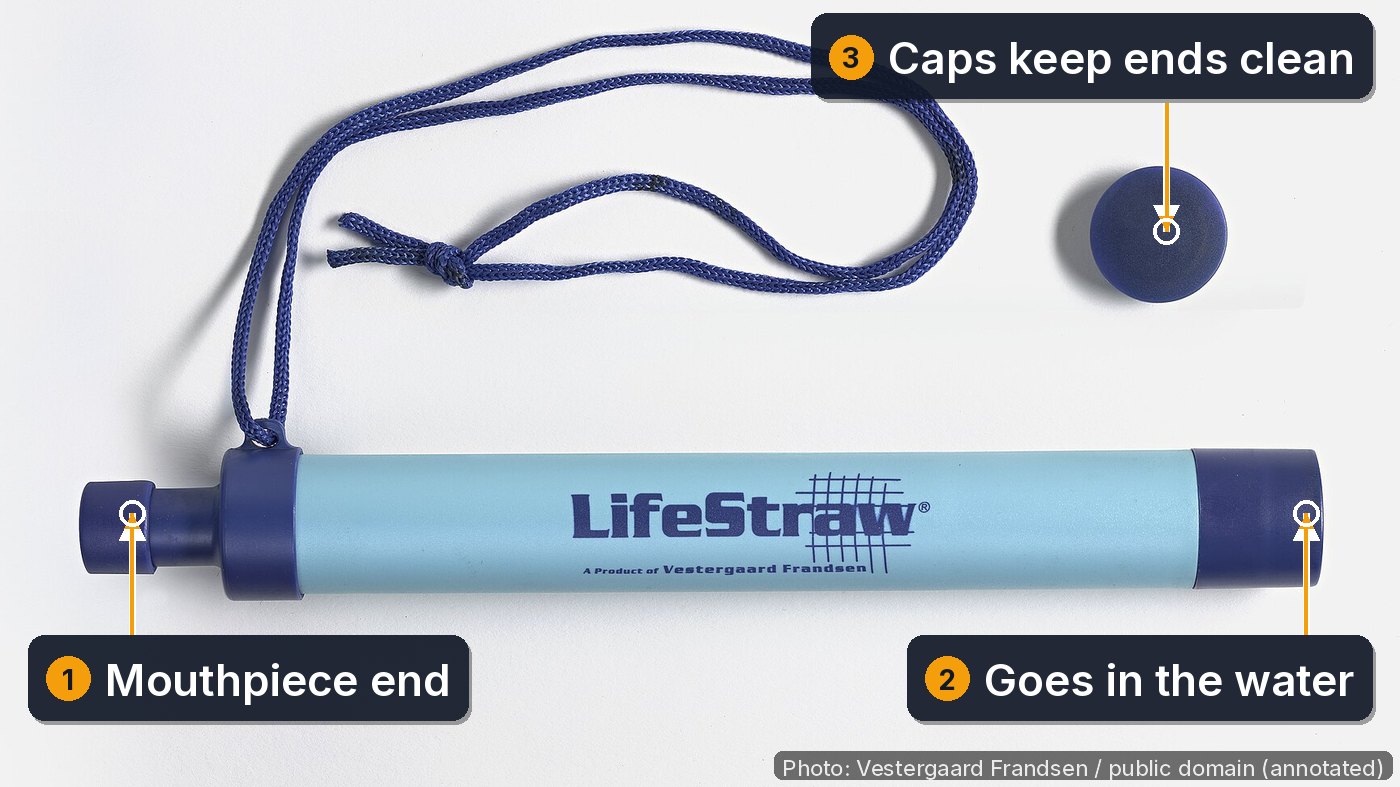
Photo: Vestergaard Frandsen, public domain, via Wikimedia Commons; cropped and annotated by Peter von Panda.
Check current price on Amazon →
Is the LifeStraw good quality?
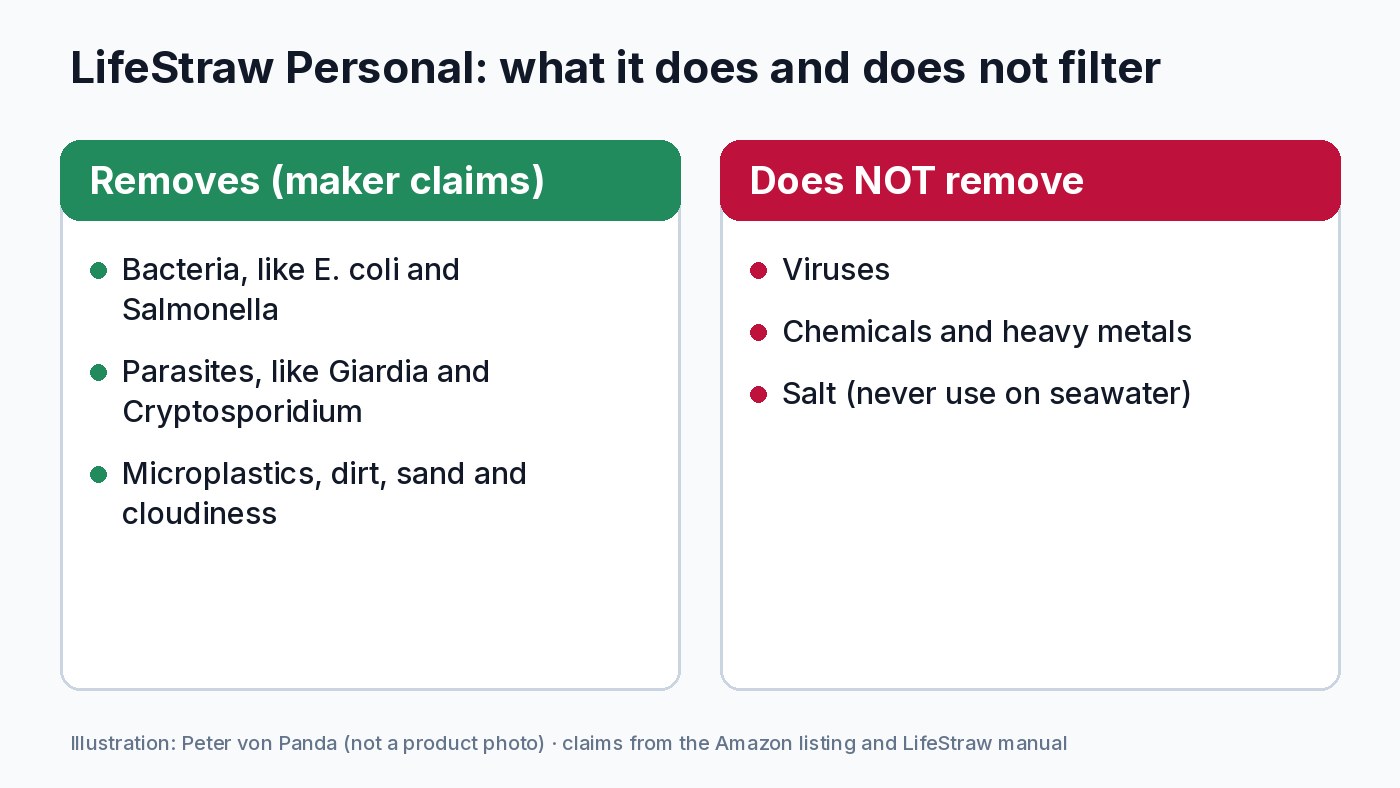
Illustration: Peter von Panda (not a product photo).
For what it is, yes. Amazon’s review summary says buyers find it reliable, light and easy to bring on trips, and many keep it in emergency kits. It is one sealed tube with nothing to assemble or lose.
Water Filter Portal notes it found no third-party certification in the NSF, WQA or IAPMO listings, so the removal numbers are LifeStraw’s own lab claims.
How do you use it?
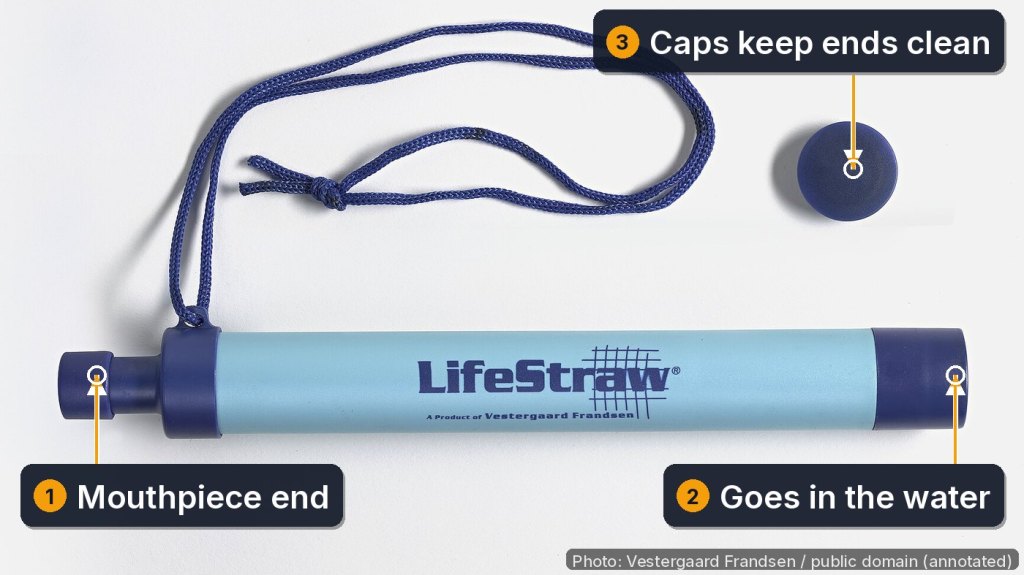
Uncap both ends, stand the bottom end in the water for about 20 seconds to prime it, take a few quick sips to get water moving, then drink. When you finish, blow air back through the mouthpiece to push out dirty water and cap it. Those steps come from LifeStraw’s manual, as summarized by Water Filter Portal.
The manual also says not to share one straw between two people.
How well does it work?
On clear water it works well. A Hiking Insights tester said stream water tasted fresh, with a faint plastic taste only when new. On murky water the flow slowed and the taste was less clean.
The bigger limit is practical: you have to get your mouth to the water. The same tester had to crouch awkwardly at a shallow stream, and the straw cannot fill a bottle or a pot.
What is the biggest complaint? Suction and drinking at the source
It takes effort to drink through, more when the filter is new, dry or clogging, per Water Filter Portal, which also says the suction is too much for many young children. Packstack reports flow drops a lot after silty water.
On r/preppers, one poster calls it a poor bug-out plan if you have no way to carry water, and an r/HikingEssential thread calls it a pain to actually use. Practice with it before you count on it.
How long does it last, and how should you store it?
LifeStraw rates it for up to 4,000 liters, and an unused straw has no shelf life. When it is used up, it stops passing water, so you know when to replace it.
After use, rinse and dry it. For long storage, LifeStraw’s instructions say to disinfect it and store it in salt water so the membrane doesn’t dry out. Keep a used straw from freezing, which Hiking Insights calls the big care rule.
Who should buy it, and who should skip it?
- Good for: emergency kits, glove boxes, day hikes near clear streams, and as a cheap backup filter.
- Skip if: you backpack often, need water for cooking or a group, travel where viruses are a risk, or need a filter a small child can use easily.
What are the best alternatives?
Sawyer Squeeze
Filters into pouches or bottles so you can carry and share water. Pick it for camping, cooking and families.
Sawyer MINI
Smaller pores (0.1 micron vs 0.2) and threads onto a bottle, per Water Filter Portal. Pick it for regular hiking.
LifeStraw Peak Series Straw
LifeStraw’s redesigned straw, built to clog less in silty water, and it can thread onto some bottles. Pick it if you like the straw idea but want more flexibility.
More quick answers
Does LifeStraw remove viruses?
No. LifeStraw lists bacteria, parasites and microplastics only. Where viruses are a risk, the CDC advises filtering and then disinfecting.
Can you drink tap water or lake water with a LifeStraw?
Yes, fresh water from lakes, streams or taps, but never seawater or chemically contaminated water, per the manual.
How long does a LifeStraw last?
Up to 4,000 liters (1,000 gallons), per LifeStraw. An unused straw has no shelf life.
Can kids use a LifeStraw?
With adult supervision, per the manual, but Water Filter Portal notes the suction can be too much for many young children.
Check current price on Amazon →
- Amazon listing B006QF3TW4 (claims, specs, rating, review summary)
- LifeStraw: Personal Water Filter Straw product page
- Water Filter Portal: LifeStraw personal water filter review (manual, storage and certification notes)
- Hiking Insights: LifeStraw Personal trail-tested review
- Packstack: LifeStraw Personal Water Filter review
- Reddit r/preppers: Lifestraws
- Reddit r/HikingEssential: Unpopular opinion on the LifeStraw Personal
This is a buyer’s guide pulled together from the manufacturer’s specs, the Amazon listing and independent reviews. Peter has not personally tested this product.